















Motion sensors are one of the simplest and most effective ways to improve energy efficiency, convenience and security in residential and commercial properties. Instead of leaving lights or connected devices operating unnecessarily, a properly selected PIR motion sensor activates them only when movement is detected.
Sparky Shop’s indoor and outdoor PIR sensors combine high-sensitivity motion detection, adjustable operating controls, strong load capacity and IP65 weather protection. They are suitable for security lighting, pathways, entrances, garages, warehouses, offices and many other automated lighting applications.
With an adjustable detection range of up to 12 metres, a wide 180-degree sensing angle and a three-year warranty, these sensors provide dependable automation without the high cost or complexity of a complete smart-home system.
What Is a PIR Motion Sensor?
PIR stands for passive infrared. A PIR sensor detects changes in infrared energy caused by people moving through its detection area.
People naturally produce infrared heat. When someone walks across the sensor’s field of view, the sensor identifies the change and activates the connected light or compatible electrical device.
Unlike cameras, PIR sensors do not record images, conversations or personal information. They simply detect changes in heat movement, making them a practical option for lighting automation and basic security applications.
These controls allow the sensor to be adjusted for different locations rather than relying on one fixed factory setting.
How Motion Sensors Improve Energy Efficiency
Lighting is often left operating in garages, corridors, toilets, storage rooms, stairwells and outdoor areas long after the space has been vacated. This wastes electricity and can shorten the operating life of lamps and lighting equipment.
A PIR sensor reduces this unnecessary operating time by switching the connected light on only when movement is detected. The light then turns off automatically after the selected delay period.
For example, a security light that would otherwise remain on for eight hours every night may operate for only a fraction of that time when controlled by a motion sensor. The actual savings will depend on the lighting wattage, occupancy frequency, delay setting and ambient-light setting.
The adjustable delay makes it possible to balance convenience with energy efficiency. A short delay may be suitable for a driveway or entrance, while a longer delay may be more appropriate for a workshop or storage area where someone remains active for several minutes.
Automatic Day and Night Operation
The adjustable light-sensitivity control allows the sensor to determine whether the connected light should operate during daylight, low-light conditions or only at night.
The sensor can be adjusted from approximately 3 to 2000 lux:
- A low lux setting is suitable when the light should operate only when it is dark.
- A medium setting may be used for covered entrances, garages and shaded areas.
- A high setting allows the sensor to activate the connected load during brighter conditions.
This prevents outdoor security lighting from switching on unnecessarily during the day while still allowing flexible operation in darker indoor spaces.
Continuous Delay Reset
A common weakness of basic sensors is that the connected light can switch off while someone is still nearby. Our sensors use continuous delay reset.
Each new movement detected during the operating period restarts the selected delay. For example, when the delay is set to five minutes, movement detected after four minutes starts another five-minute period.
This helps keep the light operating while an area remains occupied and allows it to turn off automatically after movement has stopped.
Indoor Applications
Although motion sensors are commonly associated with outdoor security lights, they can also provide substantial benefits inside residential and commercial buildings.
Residential Indoor Uses
Garages
A sensor can automatically activate garage lighting when a vehicle enters or someone walks through the door. This is useful when the person is carrying groceries, tools or equipment and cannot easily reach the wall switch.
Hallways and Stairwells
Hallways and stairways are often used briefly but may remain illuminated for hours. Motion-controlled lighting provides visibility when required and switches off after the area is vacated.
Storage Rooms
Storage rooms are a common source of wasted electricity because lights are frequently left on accidentally. A PIR sensor removes the need to rely on people remembering to switch the light off.
Laundry Areas
Automatic lighting can be helpful when entering a laundry while carrying clothing or household items.
Covered Entrances
Motion sensors can control lighting around porches, internal entryways and covered access areas, improving visibility when people arrive home at night.
Commercial Indoor Uses
Offices
Sensors can control lighting in meeting rooms, utility spaces, print rooms and other areas that are not occupied continuously.
Warehouses
Automated lighting can be used in selected aisles, loading areas or storage zones. Rather than illuminating the entire area constantly, lighting can operate when workers enter a specific zone.
Retail Stockrooms
Stockroom lights are often left operating throughout the day despite only occasional use. Motion-controlled operation can reduce unnecessary runtime.
Shared Toilets and Changing Areas
Sensors help ensure that lighting operates when the area is occupied and switches off after people leave.
Apartment and Commercial Corridors
Common access areas can be illuminated when movement is detected instead of remaining fully lit throughout the night.
Outdoor Applications
The IP65 housing provides protection against dust and water jets, making the sensor suitable for many exposed outdoor lighting installations.
Driveways
A sensor can activate security lights when a vehicle or person enters the driveway. The wide 180-degree detection field allows movement to be detected across a broad approach area.
Pathways and Walkways
Automatic pathway lighting improves visibility for residents, visitors, customers and staff while reducing the need for continuous overnight operation.
Garages and Carports
The sensor can activate lights when someone approaches a garage door, enters a carport or steps out of a vehicle.
Building Entrances
Motion-activated lighting can improve visibility around residential, retail and commercial entrances. This can make it easier to identify steps, keys, door handles and potential obstructions.
Loading Areas
Commercial loading bays and delivery entrances may only need lighting when staff or vehicles are present. Sensors can reduce unnecessary lighting operation during inactive periods.
Service Areas
Bin areas, rear access points, plant areas and equipment zones can be illuminated automatically when authorised staff enter.
Outdoor Security Lighting
Sudden light activation may discourage unwanted activity and makes it easier for occupants or security personnel to notice movement around a property.
A motion sensor should be treated as one part of a broader security strategy rather than as a replacement for alarms, locks, cameras or monitored security systems.
Residential and Commercial Comparison
| Requirement | Residential Use | Commercial Use |
|---|---|---|
| Main purpose | Convenience, security and energy savings | Energy management, workplace safety and operational efficiency |
| Typical locations | Driveways, garages, hallways, entrances and storage rooms | Warehouses, corridors, loading bays, offices and service areas |
| Detection area | Usually one entrance or defined outdoor area | May cover larger or multiple operational zones |
| Delay setting | Often short to medium | May require longer operating periods |
| Lighting load | Usually one or several household lights | May involve multiple fittings within the rated load |
| Main benefit | Lights operate automatically when needed | Reduced operating costs across frequently used facilities |
The same sensor can serve both environments, but the placement, connected load and settings should be selected according to how the space is used.
Comparison with Other Sensor Types
PIR Sensors Versus Basic Timer Switches
A timer switch operates according to a fixed schedule or countdown. It does not know whether anyone is present.
A PIR sensor responds to actual movement. This makes it more efficient in areas where occupancy is irregular.
Timers remain useful where lighting must operate at predictable times, while PIR sensors are generally better for entrances, pathways, storage areas and other spaces with unpredictable activity.
PIR Sensors Versus Photocell Sensors
A photocell switches lighting according to ambient light levels. It may turn a light on at sunset and leave it operating until sunrise.
A PIR sensor with day and night sensing uses both ambient light and movement. The light can remain off during darkness until someone enters the detection zone.
This can produce greater energy savings in areas where continuous overnight lighting is unnecessary.
PIR Sensors Versus Microwave Sensors
Microwave sensors transmit signals and detect changes in the reflected signal. They can be highly sensitive and may detect movement through some lightweight materials.
PIR sensors detect infrared heat movement and are often easier to control within a defined outdoor or indoor detection area. They are commonly used for security lighting because they provide effective motion detection without the potential over-sensitivity of some microwave sensors.
PIR Sensors Versus Smart Wi-Fi Sensors
Smart sensors may provide app control, schedules, notifications and integration with other smart-home products. However, they often require compatible hubs, Wi-Fi access, accounts or ongoing software support.
A standard wired PIR sensor provides direct and reliable automatic control without depending on an internet connection or smartphone application.
For customers who mainly want automatic lighting, a conventional PIR sensor is usually simpler and more cost-effective.
Sensor Comparison Summary
| Sensor Type | Detects Occupancy | Detects Darkness | Internet Required | Best Application |
|---|---|---|---|---|
| PIR motion sensor | Yes | Yes, on adjustable models | No | Security and automatic lighting |
| Timer switch | No | No | No | Fixed operating schedules |
| Photocell | No | Yes | No | Dusk-to-dawn lighting |
| Microwave sensor | Yes | Sometimes | No | High-sensitivity indoor detection |
| Smart Wi-Fi sensor | Yes | Model dependent | Usually | Connected smart-home automation |
Understanding the 180-Degree Detection Angle
The 180-degree field of detection allows the sensor to monitor a wide area in front of the mounting position.
The sensor normally performs best when a person moves across the detection zones rather than walking directly towards the sensor. Correct positioning is therefore important.
For example, a sensor installed beside a driveway may detect movement more reliably when people or vehicles travel across its field of view. A poorly positioned sensor facing directly down a narrow approach may have a shorter effective response distance.
Up to 12-Metre Detection Range
The sensor can detect movement at distances of up to approximately 12 metres under suitable conditions.
Actual performance may vary because of:
- Installation height
- Sensor angle
- Direction of movement
- Outdoor temperature
- Nearby walls or obstructions
- Clothing and body heat
- Environmental conditions
- Sensor sensitivity and positioning
The maximum detection range should not be treated as a guaranteed distance in every installation. Careful placement is more important than simply choosing the longest possible range.
Adjustable Delay from 10 Seconds to 15 Minutes
Different areas require different operating times.
A delay of approximately 10 to 30 seconds may be suitable for:
- Brief access points
- Driveways
- Bin areas
- Short pathways
A delay of several minutes may be better for:
- Garages
- Workshops
- Loading areas
- Storage rooms
- Building entrances
- Commercial service areas
Using an unnecessarily long delay reduces the potential energy savings. The delay should be long enough for safe and convenient use but not longer than the activity requires.
Strong Lighting Load Capacity
The sensor supports compatible electrical loads of up to 1200W and LED lighting loads of up to 300W.
LED fittings behave differently from traditional resistive lighting loads because their drivers can create higher starting currents. This is why the LED rating is lower than the maximum general load rating.
The total connected LED load should remain within the stated 300W limit. Compatibility with the connected fittings, drivers and switching arrangement must also be considered.
Low Standby Power Consumption
The sensor consumes approximately 0.5W while monitoring for movement.
Although no automatic sensor operates without power, this low standby consumption is small compared with the energy that can be wasted by leaving higher-wattage lighting switched on unnecessarily.
The largest savings usually come from reducing the operating time of the connected lighting rather than from minor differences in the sensor’s own standby consumption.
IP65 Weatherproof Protection
An IP65 rating means the enclosure is designed to resist dust ingress and water jets.
This makes the sensor suitable for many outdoor locations, including:
- Exterior walls
- Covered entrances
- Driveways
- Carparks
- Garages
- Pathways
- Loading areas
IP65 does not mean that the sensor should be submerged in water. Installation quality, cable entry sealing, mounting orientation and the condition of the enclosure remain important for maintaining weather resistance.
Operating Temperature
The sensor is designed to operate between approximately -20°C and +40°C, making it suitable for a wide range of indoor and outdoor environments.
Extreme heat, direct exposure to heat-producing equipment or mounting near ventilation outlets can affect PIR performance. The sensor should not be positioned directly beside heaters, air-conditioning outlets or other rapidly changing heat sources.
Practical Installation Considerations
For the best performance, the sensor should generally be installed between 1.8 and 2.5 metres above the ground.
Avoid pointing it directly towards:
- Heating or cooling outlets
- Moving tree branches
- Reflective surfaces
- Busy public roads
- Direct heat sources
- Areas outside the property that do not require detection
Poor positioning can cause unwanted activation or reduce detection reliability.
The detection angle, lux setting and delay should be tested after installation. Factory settings are not always suitable for the final location.
Electrical installation must be completed safely and in accordance with applicable local electrical requirements. Where fixed wiring is involved, use a suitably qualified electrical professional.
How to Choose the Correct Settings
Lux Setting
Set the lux control according to when the lighting should operate.
For night-only security lighting, start with a low setting and adjust it gradually until the light activates at the preferred darkness level.
Delay Setting
Begin with a shorter operating time. Increase it only when the light turns off before the area has been vacated.
Sensor Direction
Aim the sensor so that expected movement crosses the detection field. Avoid directing it towards areas with constant activity unless that activity needs to trigger the light.
Mounting Height
Keep the sensor within the recommended height of 1.8 to 2.5 metres. Mounting it substantially higher or lower can change the detection pattern and effective range.
Why Choose Sparky Shop Sensors?
- Wide range of quality electrical and lighting products
- Competitive pricing across New Zealand
- Trusted electrical products supplier
- Excellent customer service and support
- Fast and reliable nationwide delivery
- Highly rated by customers
- Five-star customer reviews
- Products suitable for residential and commercial projects
- Reliable warranties for added peace of mind
- Easy and secure online shopping
Who Should Consider Installing Motion Sensors?
Motion sensors are particularly useful for:
- Homeowners looking to reduce unnecessary lighting use
- Landlords improving common-area lighting
- Electricians completing security-light installations
- Property managers responsible for shared spaces
- Retail businesses with stockrooms and rear entrances
- Warehouses with intermittently used zones
- Workshops and service facilities
- Schools and community buildings
- Offices with low-occupancy utility rooms
- Commercial buildings with pathways and loading areas
Final Thoughts
A well-positioned PIR sensor can improve convenience, security and energy efficiency without requiring a complicated automation system.
The combination of a 180-degree detection angle, up to 12 metres of detection range, adjustable 3–2000 lux operation and a delay range from 10 seconds to 15 minutes makes these sensors suitable for many residential and commercial applications.
Their low 0.5W standby consumption, IP65 weather protection, strong LED load rating and three-year warranty provide a practical balance between performance, durability and price.
For driveways, pathways, garages, entrances, corridors, storage rooms, warehouses and security lighting, Sparky Shop’s indoor and outdoor PIR sensors offer a straightforward and cost-effective way to ensure that lights operate only when they are genuinely needed.
Our Best PIR Sensors on Sale
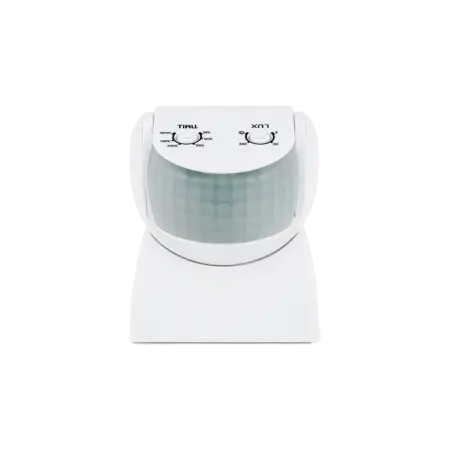
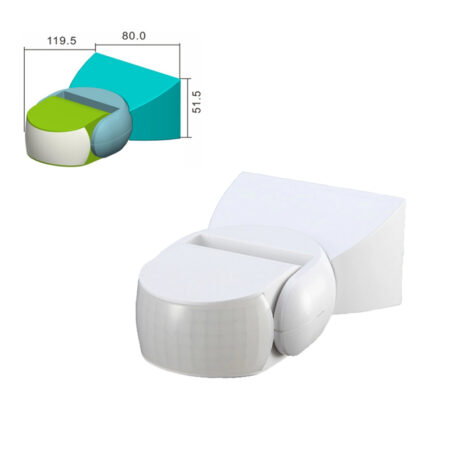
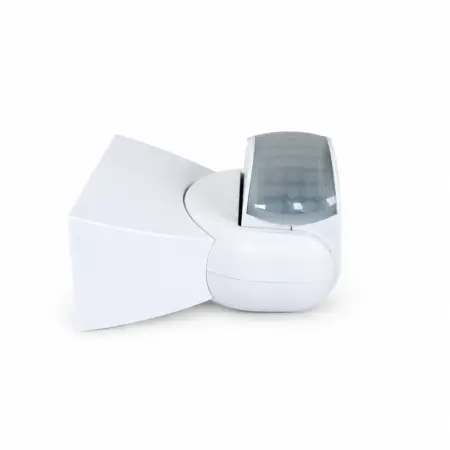
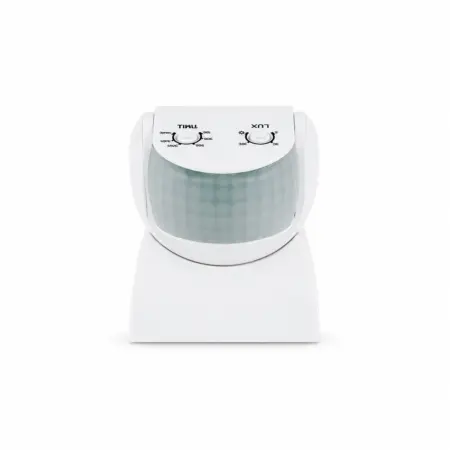
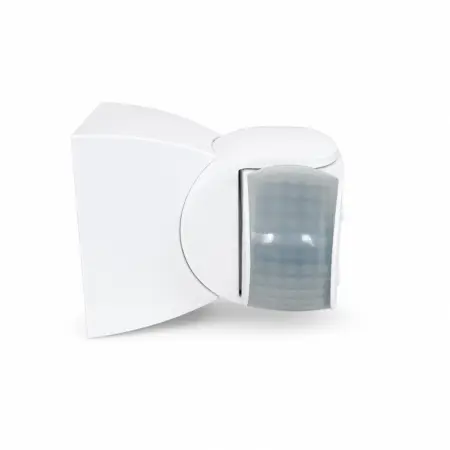
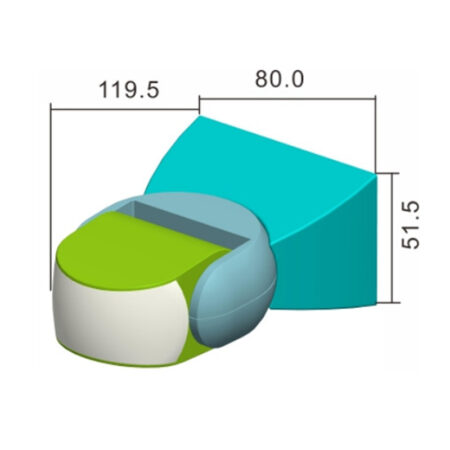
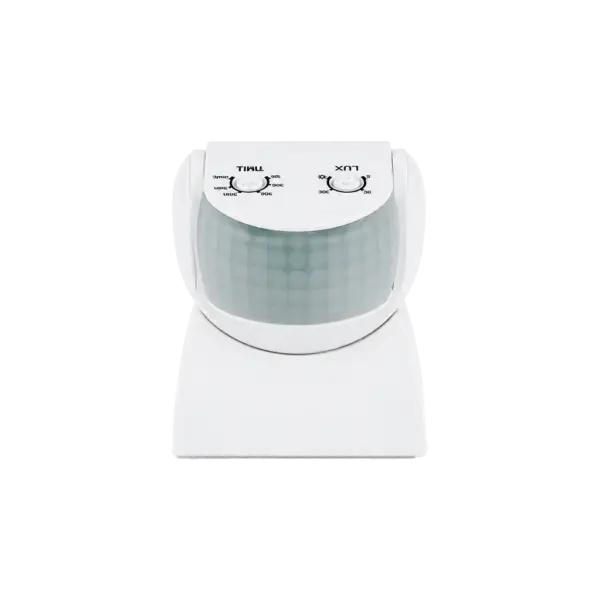
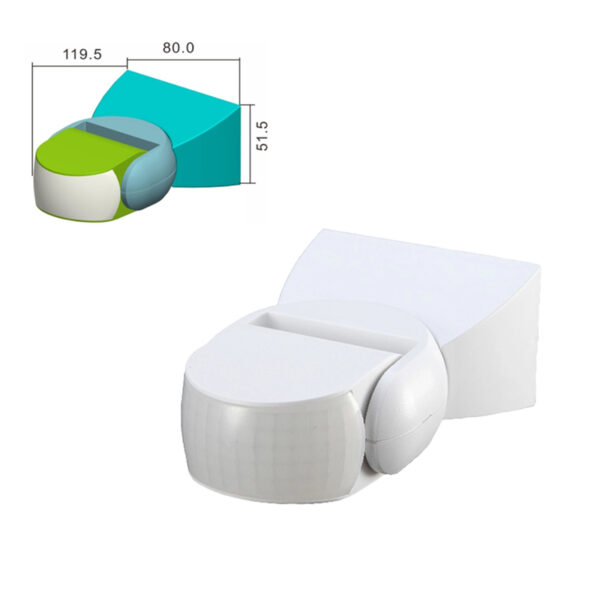
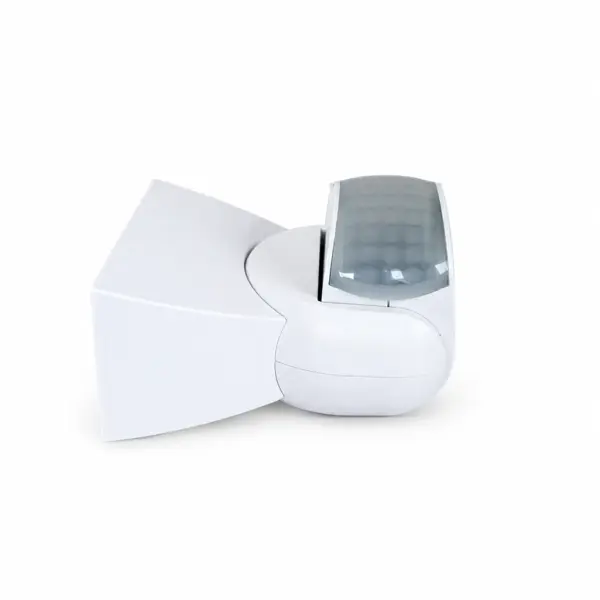
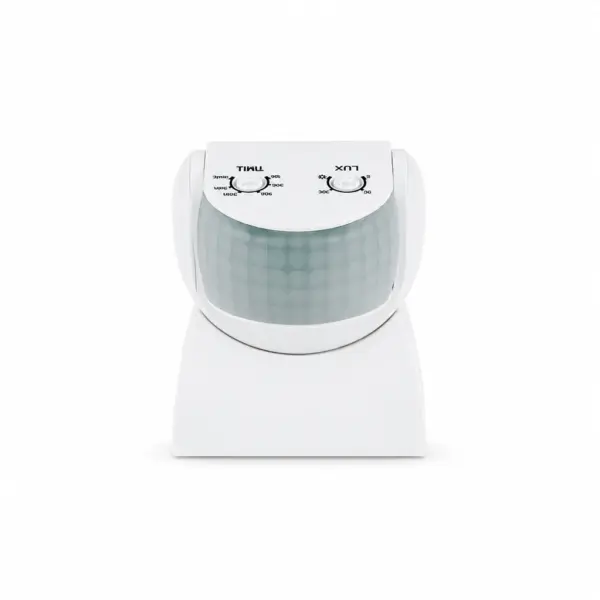
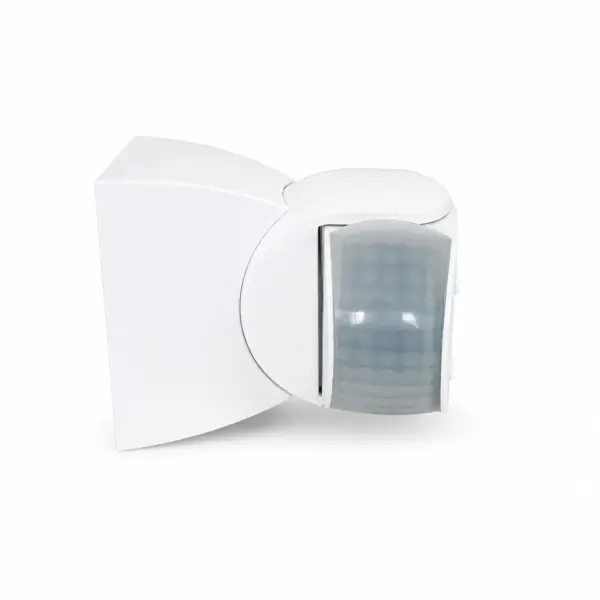
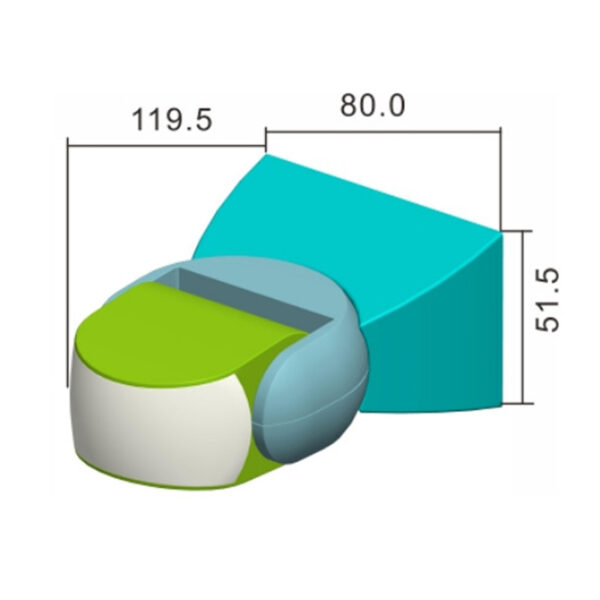
Outdoor 180° Infrared Motion Sensor – IP65
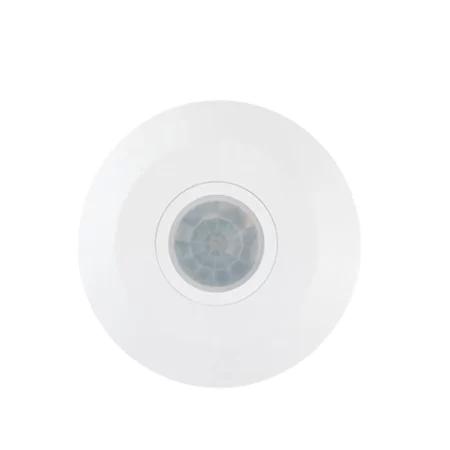
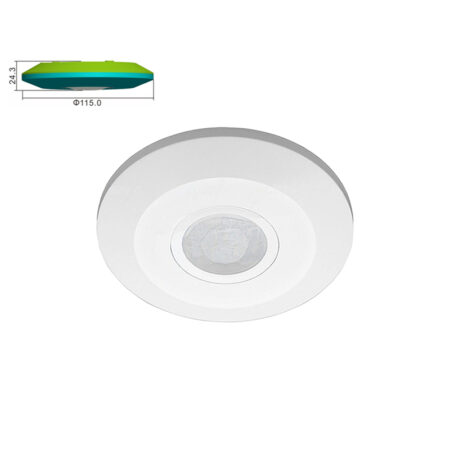
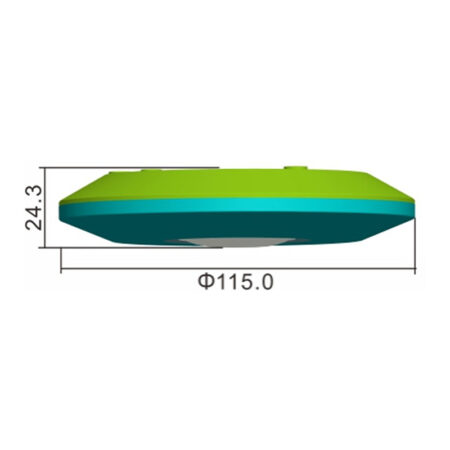
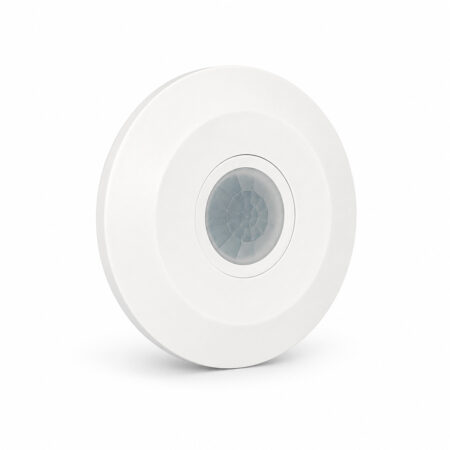
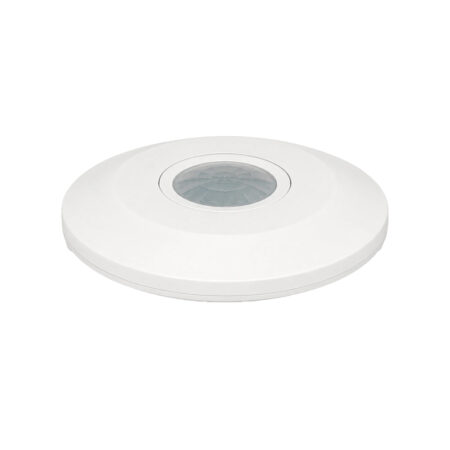
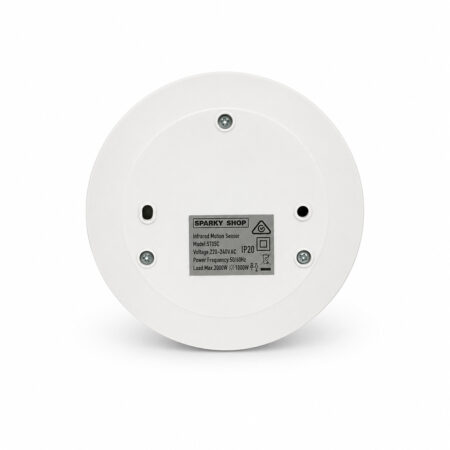
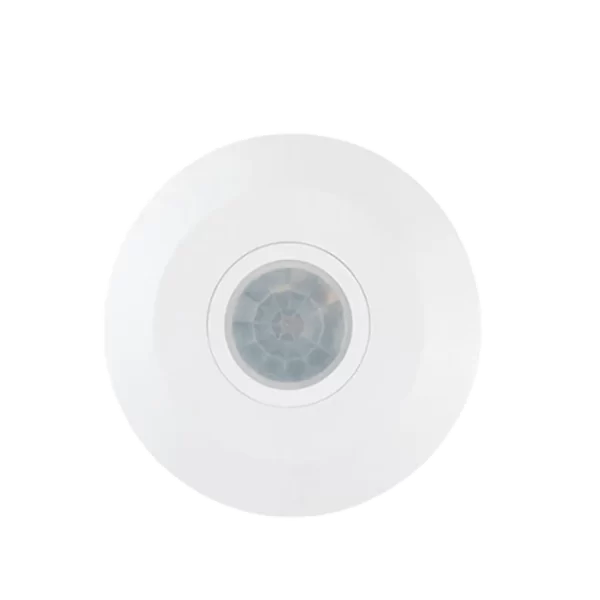
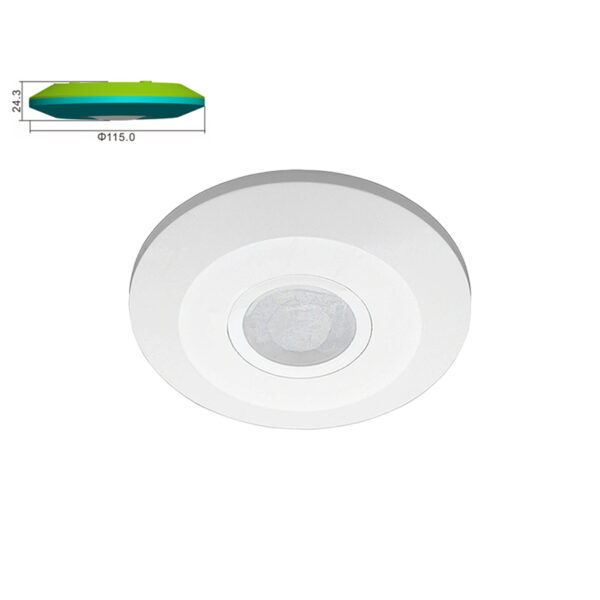
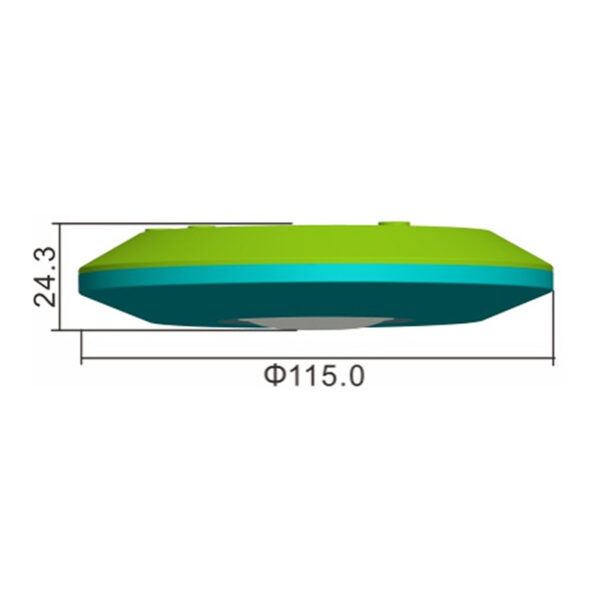
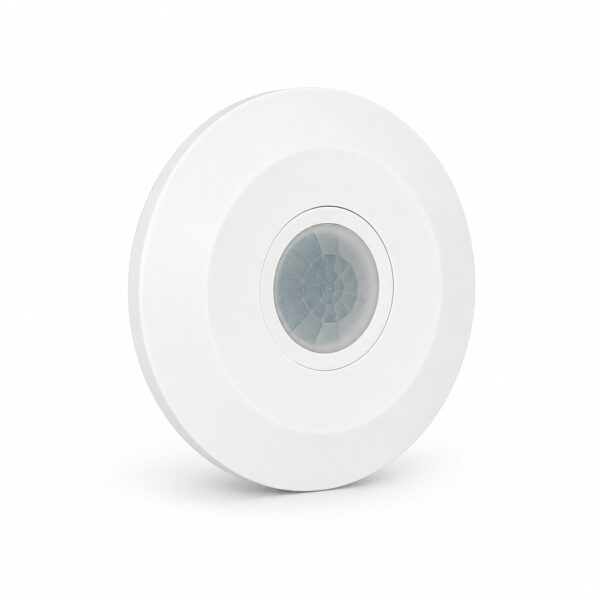
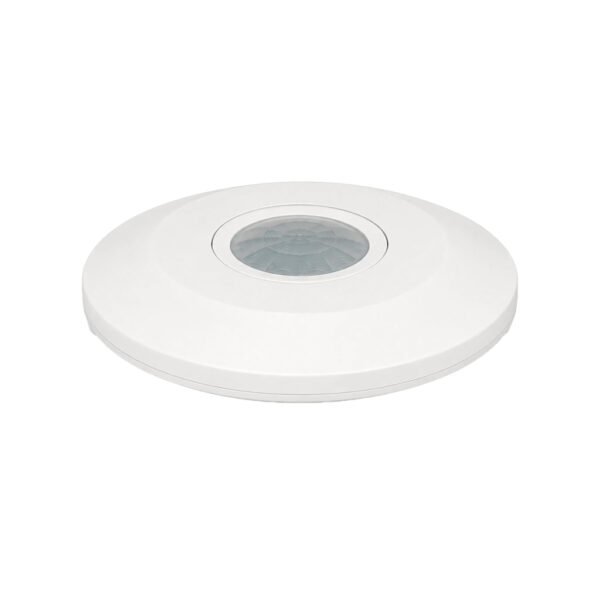
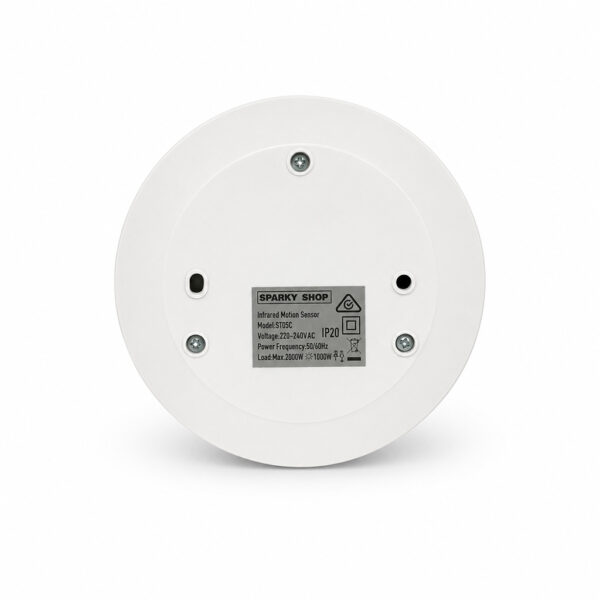
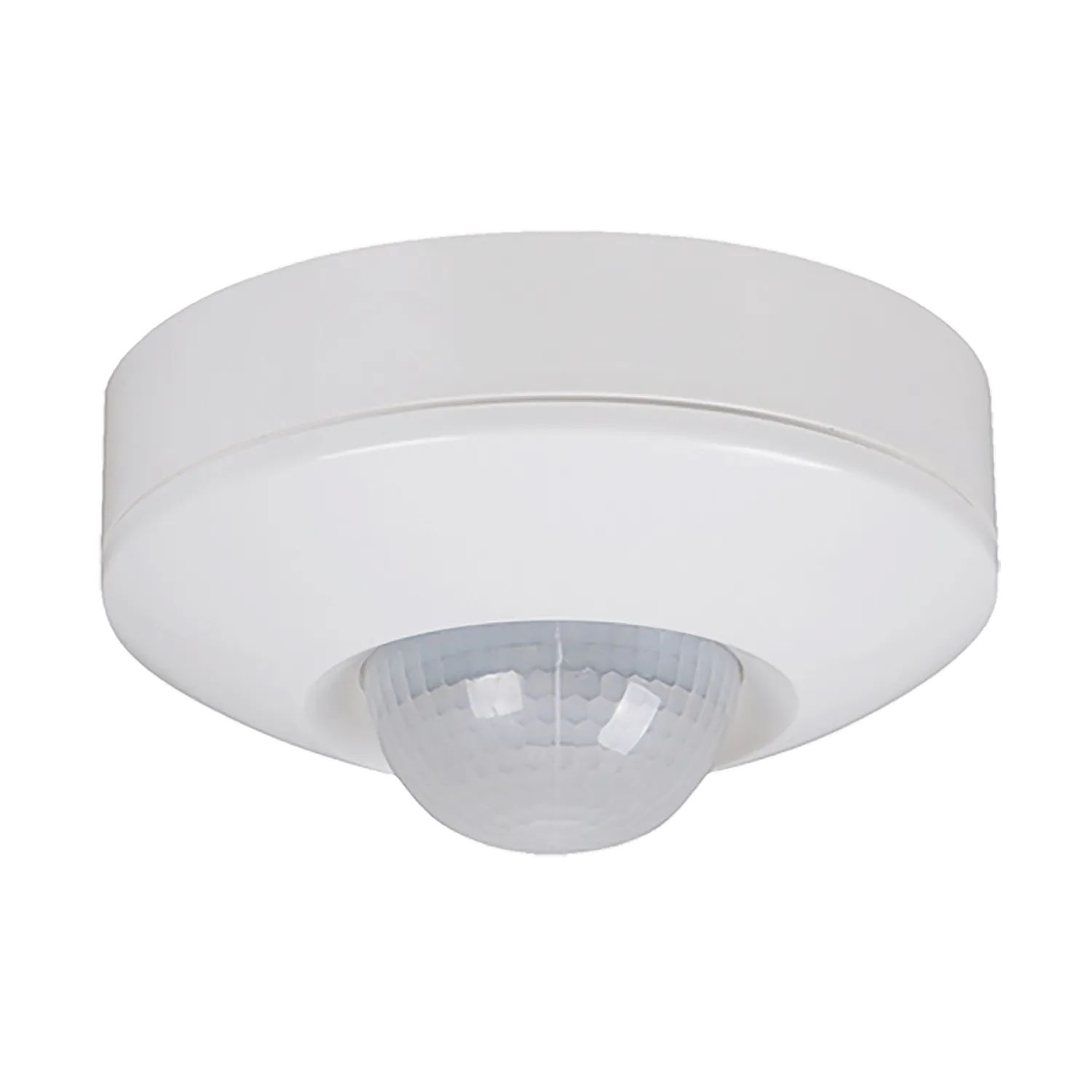
Surface Mount 360° Ceiling PIR Motion Sensor
FAQs (Motion Sensors)
-
What is the detection angle?
The sensor provides a wide 180-degree detection angle. This allows it to monitor movement across a broad area in front of the installation point.
-
What is the recommended installation height?
The recommended installation height is between 1.8 and 2.5 metres. Installing the sensor outside this range may affect its detection pattern and overall performance.
-
Can I adjust how long the light stays on?
Yes. The operating delay can be adjusted from approximately 10 seconds to 15 minutes.
-
Can the sensor control multiple LED lights?
Yes, multiple compatible LED fittings can be connected, provided their combined load does not exceed the sensor’s 300W LED rating.
-
How does the sensor help save energy?
The sensor switches lighting on only when movement is detected and turns it off automatically after the selected delay.
This helps prevent lights from being left on unnecessarily in areas such as garages, storage rooms, hallways, driveways, corridors and commercial service areas.