








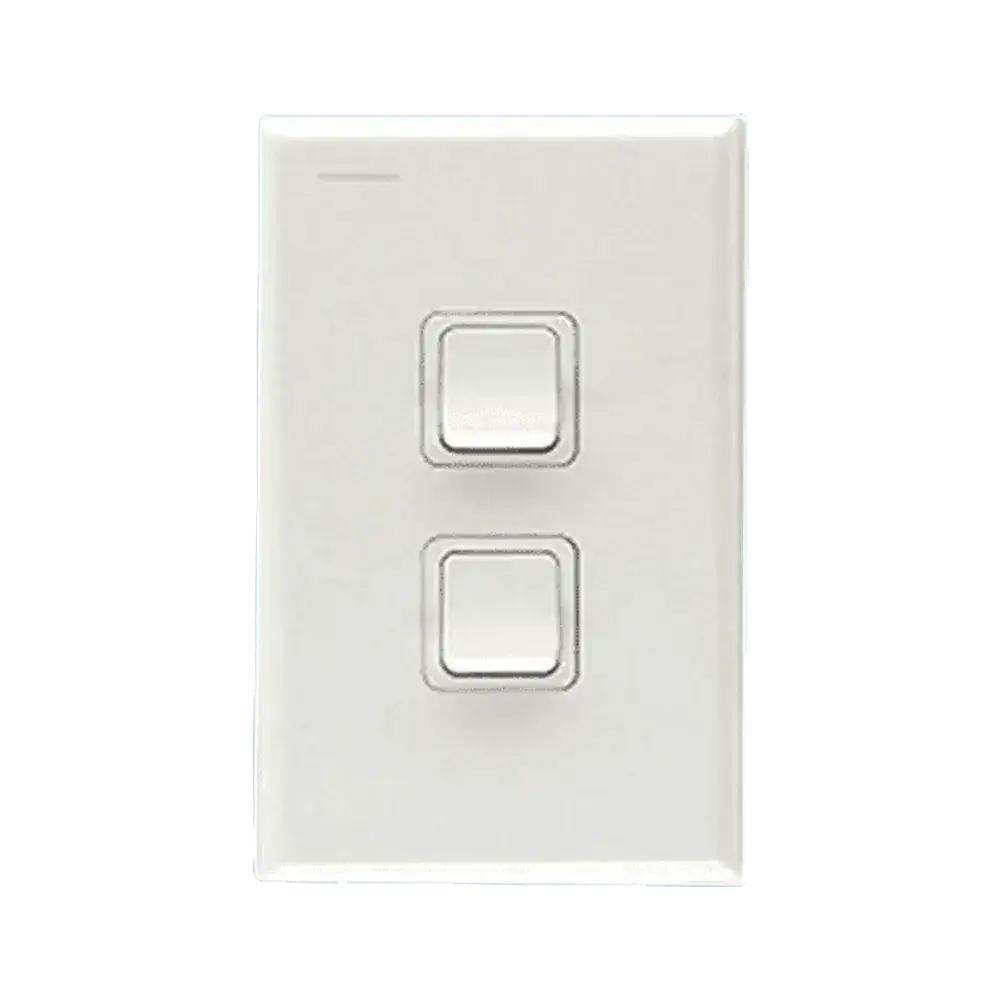


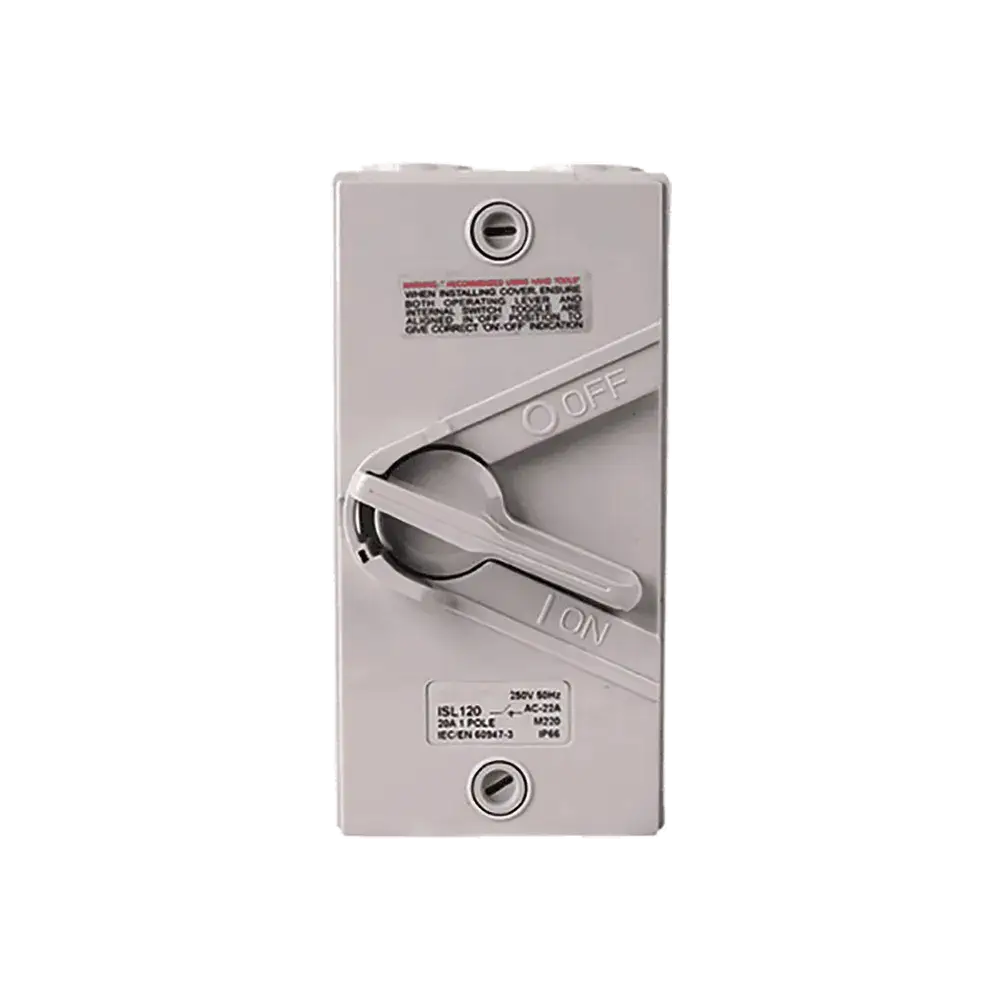

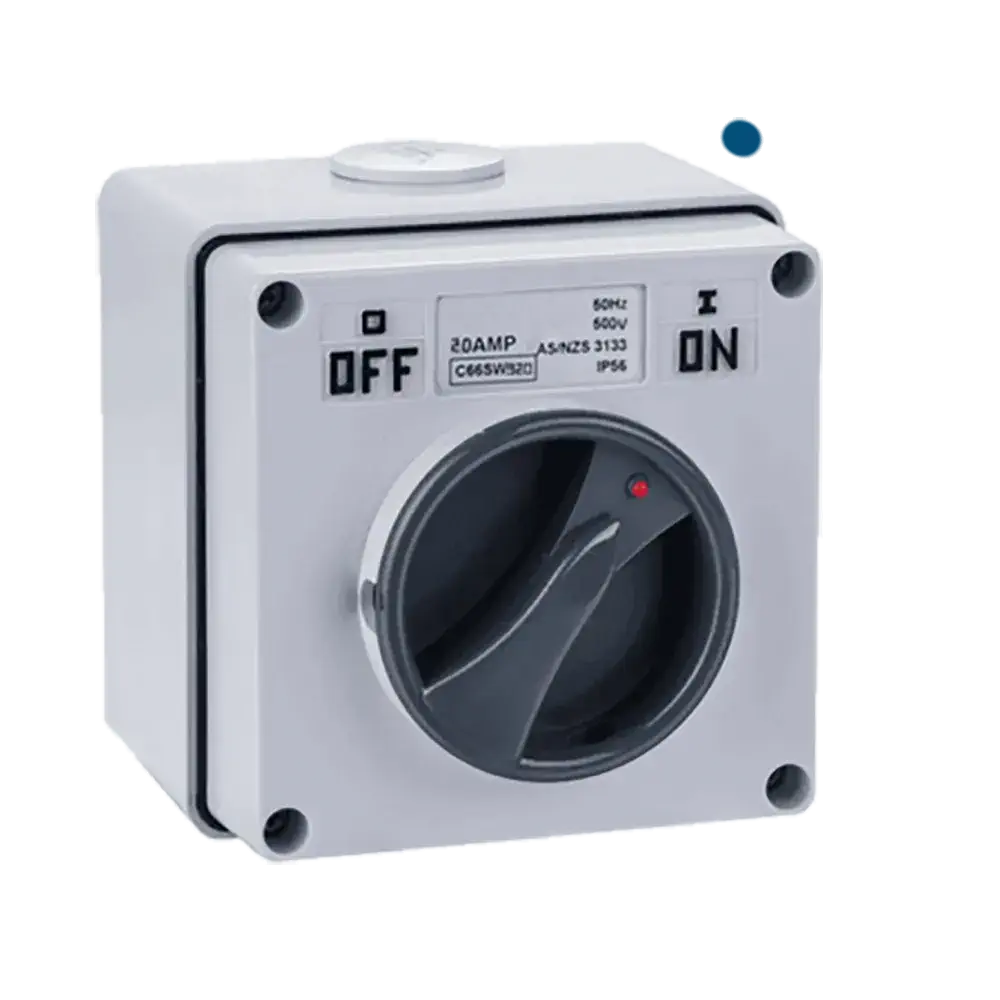






3-phase isolator switches are the simple, rugged manual switches that electricians use to safely isolate 3-phase equipment for maintenance, emergency shut-off and code compliance — think HVAC compressors, industrial motors, commercial ovens, hot-water plant, and EV chargers or on-site generators. In New Zealand you’ll commonly need weatherproof (outdoor) isolators with the right current rating, pole count and an AS/NZS standard rating for the application.
Why 3-phase Isolator Switches Matter for Commercial Sites
Safety & maintenance — provide a clear, physical break of the three live conductors before work. Useful at motor control panels, rooftop HVAC units, compressor rooms, plant rooms and temp/portable plant.
Local compliance — some installations (eg fixed hot-water heaters, certain PV components and some motor circuits) require a “true isolating switch” (switch-disconnector) to meet AS/NZS/IEC switchgear standards. Always check the relevant clause in AS/NZS 3000 and product standards AS/NZS IEC 60947-3.
Environment & reliability — commercial outdoor sites need IP-rated enclosures (IP65 or IP65 is common) to resist dust, water and UV so the isolator keeps working in harsh conditions
Common Weatherproof Isolator Switches in New Zealand
Below is a compact table of 3-phase isolator types listed on Sparky Shop (product pages used as sources). For each product I show the core features you’ll care about.
| product / model | Rated current | Poles | IP / env. rating | Key features / notes |
|---|---|---|---|---|
| 20A 3-Phase Isolator Switch (IP66). | 20 A | 3-pole | IP66 | Weatherproof outdoor enclosure; multiple conduit entry points; inexpensive option for small motors/light commercial equipment. |
| 32A Industrial Surface Switch — 3-pole (IP66). | 32 A | 3-pole | IP66 | Heavy-duty surface mount style; suits industrial equipment and some EV/charger isolations (when rated/approved. |
| 35A 3-Pole Weatherproof Isolator (IP66) | 35 A | 3-pole | IP66 | Common mid-range rating for small commercial motors and air-conditioning units; terminals sized for larger cable. |
| 63A 3-Phase Isolator Switch (IP66). | 63 A | 3-pole | IP66 | Higher current for larger motors, plant, or distribution feeds; multiple conduit entries; explicitly states AS/NZS 60947 approval on product page. |
Practical Checklist — What to Look for When Buying a 3-Phase Isolator Switch (Commercial)
- Correct current rating (A) — choose an isolator with a continuous current rating at or above the load, with some headroom. Common commercial ratings include 20A, 32A, 35A, and 63A, with higher options for distribution.
- Number of poles — most 3-phase equipment requires a 3-pole isolator. Some applications (such as EV chargers or certain water-heating circuits) may require a 4-pole isolator to also switch the neutral.
- IP / environmental rating — for outdoor or exposed installations, select at least IP66 for dust and water resistance. Indoor plant rooms may allow lower ratings.
- Standards & certification — confirm the isolator complies with AS/NZS IEC 60947-3 or equivalent standards for code compliance, especially for hot-water systems, PV isolators, and major circuits.
- Padlockable — look for models with padlock or lock-out provisions for safe maintenance and compliance with lock-out/tag-out procedures.
- Terminal capacity & conductor size — ensure terminals are large enough to accommodate the cable sizes required (e.g., 6 mm², 10 mm²). Larger motors and higher loads need larger terminal capacity and correct torque specifications.
- Mounting type — choose between surface-mount, flush-mount, or DIN/industrial enclosures based on site layout and conduit runs.
- M-rating and making/breaking capacity — check the isolator’s duty rating (e.g., AC-23) or M-rating to ensure it can safely break motor and inductive loads on-load.
- Temperature / UV durability & warranty — for rooftop or outdoor use, select UV-stable and weather-resistant enclosures. Check warranty details for long-term durability.
What is a 3 phase isolator switch used for in commercial settings?
A 3 phase isolator switch is used to safely disconnect power from commercial equipment or circuits during maintenance, repairs, or emergencies.
Why are 3 phase isolator switches important for businesses in NZ?
They provide enhanced safety, prevent electrical hazards, and ensure compliance with New Zealand electrical standards in commercial and industrial facilities.
Can 3 phase isolator switches handle heavy machinery?
Yes, they are specifically designed to handle high-voltage, high-load equipment commonly found in factories, warehouses, and commercial buildings.